The Hyundai Terracan 2.9 CRDi with a Compass Rallye 640 with an actual weight of 1830 kg is in general a good match and suitable for all journeys on all kinds of roads.
The motor preformance of the Hyundai is in general fairly good. But the weight of the Compass with a normally distributed User Payload (200 kg in the caravan and 200 kg in the car including passengers), is quite heavy, but no problem if the caravan is well loaded and the driving speed is not too fast. Remember to load your caravan correctly, insuring that the noseweight of the caravan is sufficient and the weight is distributed properly!
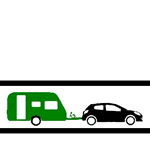
Flat roads
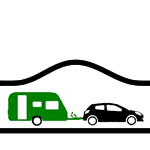
Towing Performance
219
227
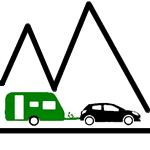
Mountains
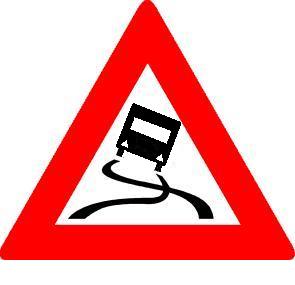
Risk of snaking
217
143
Weight ratio: 77% (84% of kerbweight)
1830 kg
2372 kg
Information on the internet cannot be free!
You can use our TowCarCalculator freely, but that doesn’t mean it’s free to use. If it has helped you, please show your appreciation with a donation.
If you found the Outfit Matches helpful, please consider supporting Caravantrekker with a small donation.
For secure donations, you can use Mollie to contribute to Caravantrekker, the owner of TowCar.info.
Thank you for your support!
Hyundai Terracan 2.9 CRDi Compass Rallye 640
Actual Weights
Compass Rallye 640: 1830 kg.
Hyundai Terracan 2.9 CRDi: 2372 kg.
Noseweight: 100 kg.
Actual weight ratio: 77%.
Performance
The engine's performance is generally good on flat roads (performance score to compare 219 points).
Speeds of 75 mph (121 km/h) to 81 mph (130 km/h) are often quite possible.
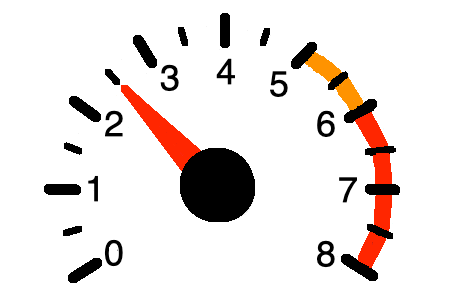
There is more than enough power at low engine speeds (score to compare 227 points).
Higher revs (1600 rpm) are usually not necessary on flat roads, under most circumstances.
Acceleration from 0-62 mph (0-100 km/h) is theoretically possible in 23.3 sec.
In the mountains the performance is generally good (score to compare 217 points).
No problems are to be expected on steep mountain roads. Hill starts are possible on steep slopes up to 14%, but do require some experience from the driver.
On motorway inclines higher revs (3000 rpm) are needed.
A speed of 61 mph (99 km/h) is usually possible on most motorway inclines.
Weight
The towing limit of the Hyundai is more than sufficient (check this in your vehicle documents).
If you passed your driving test after 1 January 1997, you will need a B+E driving license.
Weight ratio between the laden caravan and the loaded car is 77%. Common in the UK: the weight ratio between the laden caravan and the kerbweight of the car is 84%.
The risk of snaking at higher speeds, strong side winds and thoughtless driving exist. Even if the combination normally feels stable, the forces by deflection side to side are so great that it could be dangerous. Only if the driver has knowledge of and experience in driving a caravan it should be safe to drive. Proper and careful loading is essential! An electronic stability system in the car and / or on the caravan is recommended.
Recommended noseweight is 100 kg.
Safe speed up to 56 mph (90 km/h).
Stability and safety score to compare is 143 points.
If the caravan starts to snake you should reduce your speed and slow down directly! Lift your feet off the accelerator and brake gradually. Hold the steering wheel into a fixed position.
Conclusion
Performance is fairly good.
Proper and careful loading is still important!
It's a perfect match!
Influence of User Payload on stability
Weight distribution and noseweight are vital in obtaining a stable caravan.








 1830 kg
 2372 kg
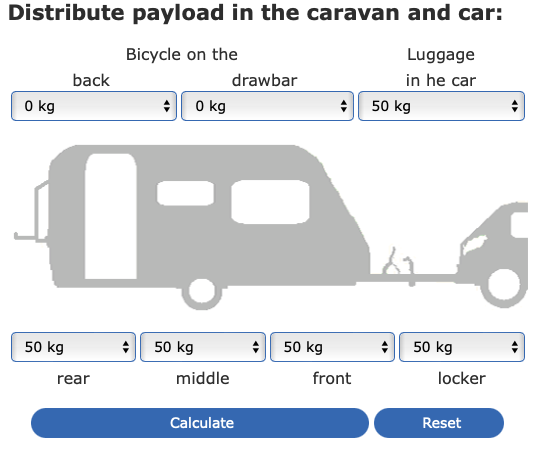 Weight distribution and noseweight are vital in obtaining a stable caravan.
 Caravantrekker