TowCar.info is funded through Google ads to provide free information. It’s perfectly fine to block ads, but please remember: if you’d like to continue using the TowCarCalculator in the future, we’d greatly appreciate a small donation.
You can pay securely to Caravantrekker using Mollie’s payment service.
Kia Carnival 2.9 CRDi Elddis Avante 636
Performance
Weight
The Kia Carnival 2.9 CRDi with a Elddis Avante 636 with an actual weight of 1657 kg is in general a good match and suitable for journeys on most kinds of roads, sometimes with some limitations in the mountains.
The motor preformance of the Kia is in general more than sufficient. And also the weight of the Elddis with a normally distributed User Payload (200 kg in the caravan and 200 kg in the car including passengers), is good.
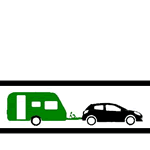
Flat roads
Towing Performance
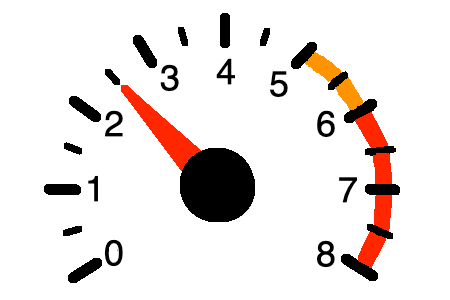
198
201
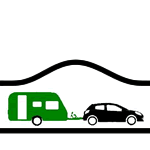
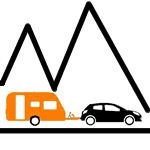
Mountains
Risk of snaking
176
179
Weight ratio: 68% (75% of kerbweight)
1657 kg
2420 kg
Information on the internet cannot be free!
If the Outfit Matches were useful to you, please consider supporting us with a small donation.
One Outfit Match
More Outfit Matches
You can make a secure donation to Caravantrekker (the team behind TowCar.info) using Mollie.
Thank you for your support!
Kia Carnival 2.9 CRDi Elddis Avante 636
Actual Weights
Elddis Avante 636: 1657 kg.
Kia Carnival 2.9 CRDi: 2420 kg.
Noseweight: 90 kg.
Actual weight ratio: 68%.
Performance
The engine's performance is generally fairly good on flat roads (performance score to compare 198 points).
Speeds of 73 mph (117 km/h) to 79 mph (127 km/h) are often quite possible.
There is more than enough power at low engine speeds (score to compare 201 points).
Slightly higher revs (1700 rpm) may be necessary under normal conditions on flat roads.
Acceleration from 0-62 mph (0-100 km/h) is theoretically possible in 27.7 sec.
In the mountains the performance is generally fairly good (score to compare 176 points).
No problems are to be expected on steep mountain roads. Hill starts are possible on steep slopes up to 12%, but do require some experience from the driver.
On motorway inclines higher revs (3500 rpm) are needed.
A speed of 57 mph (92 km/h) is usually possible on most motorway inclines.
Weight
The towing limit of the Kia is more than sufficient (check this in your vehicle documents).
If you passed your driving test after 1 January 1997, you will need a B+E driving license.
Weight ratio between the laden caravan and the loaded car is 68%. Common in the UK: the weight ratio between the laden caravan and the kerbweight of the car is 75%.
There is a small chance of snaking at higher speeds, strong side winds and thoughtless driving. Even if the combination normally feels stable, the forces by deflection side to side are great at high speed. For drivers with knowledge of, and experience in driving a caravan it is safe to drive, but proper and careful loading is still important! An electronic stability system in the car and / or on the caravan is worth considering.
Recommended noseweight is 85 - 90 kg.
Towball limit is 75 kg (Check this on the type plate of your towbar!)
Safe speed up to 62 mph (100 km/h).
Stability and safety score to compare is 179 points.
If the caravan starts to snake you should reduce your speed and slow down directly! Lift your feet off the accelerator and brake gradually. Hold the steering wheel into a fixed position.
Conclusion
Performance is more than sufficient.
If the caravan is well loaded safe driving is possible.
It's a good match, sometimes with some limitations in the mountains.
Influence of User Payload on stability
Weight distribution and noseweight are vital in obtaining a stable caravan.






 1657 kg
 2420 kg

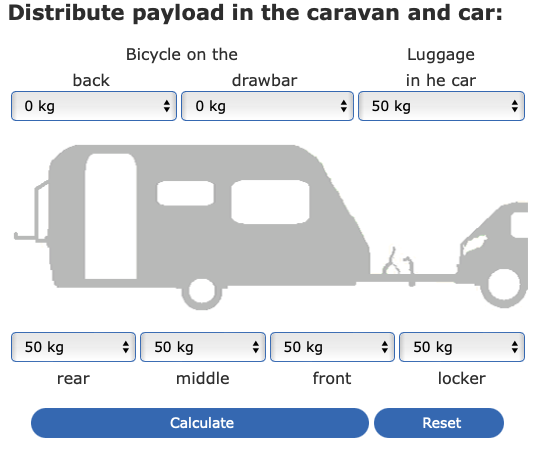 Weight distribution and noseweight are vital in obtaining a stable caravan.
 Caravantrekker

